
Every season offers something special with Spring topping most people’s list as the best time of the year. It’s a time when the world around us emerges from the cold of winter, with birds active in their mating plumage and plants of all shapes and sizes in bloom. The start of Spring this year was spent in Burrill Lake and Bermagui on the South Coast of New South Wales and most of the images in this post are from those couple of weeks. I hope you enjoy them. Greg
(click on images to enlarge)
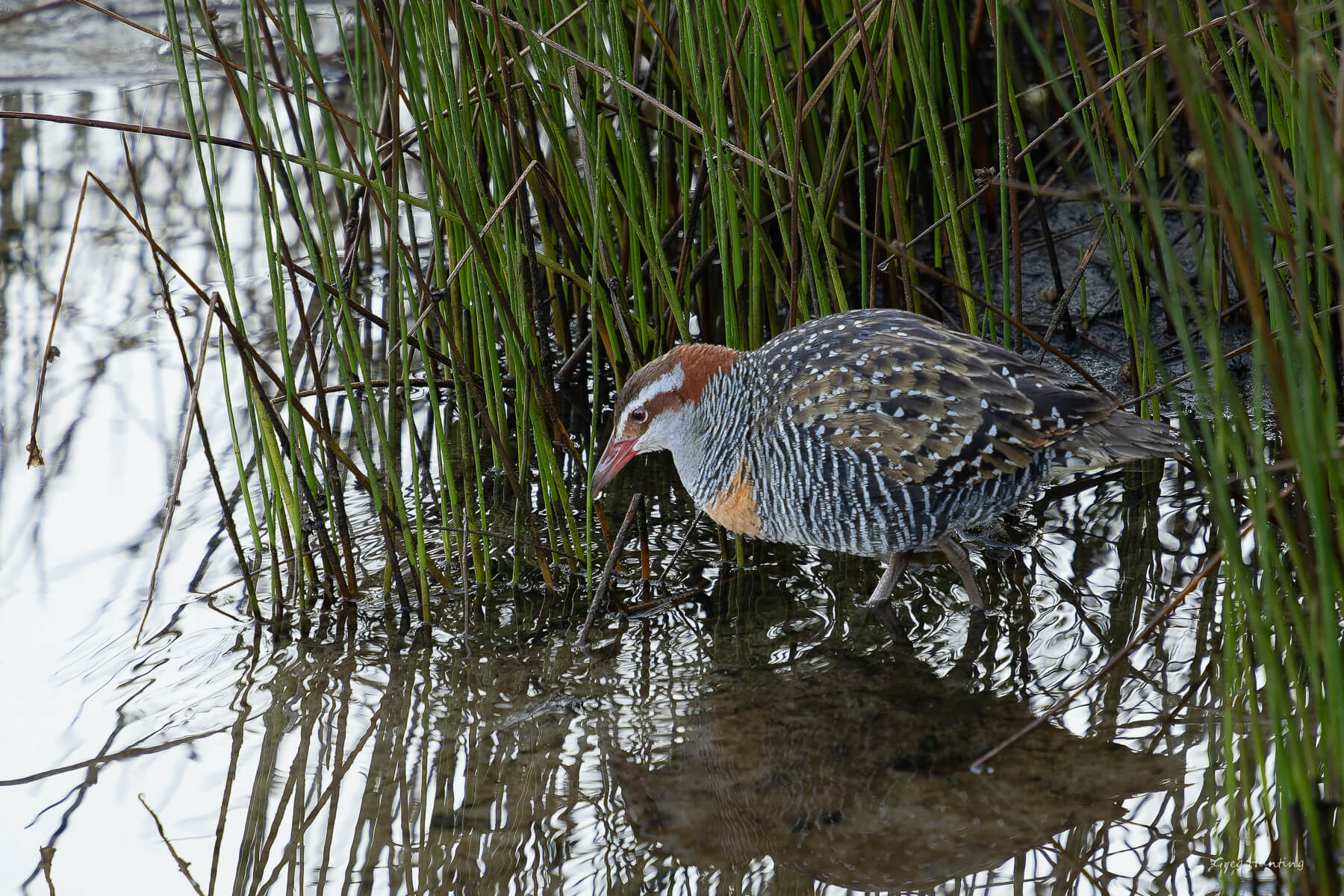
Buff Banded Rails are secretive, rarely seen birds, hiding out in dense vegetation on the edge of wetland areas. This one surprised me by wandering out into the open at Burrill Lake and happily feeding while I watched. As you can see, their feather colours and patterns are striking.
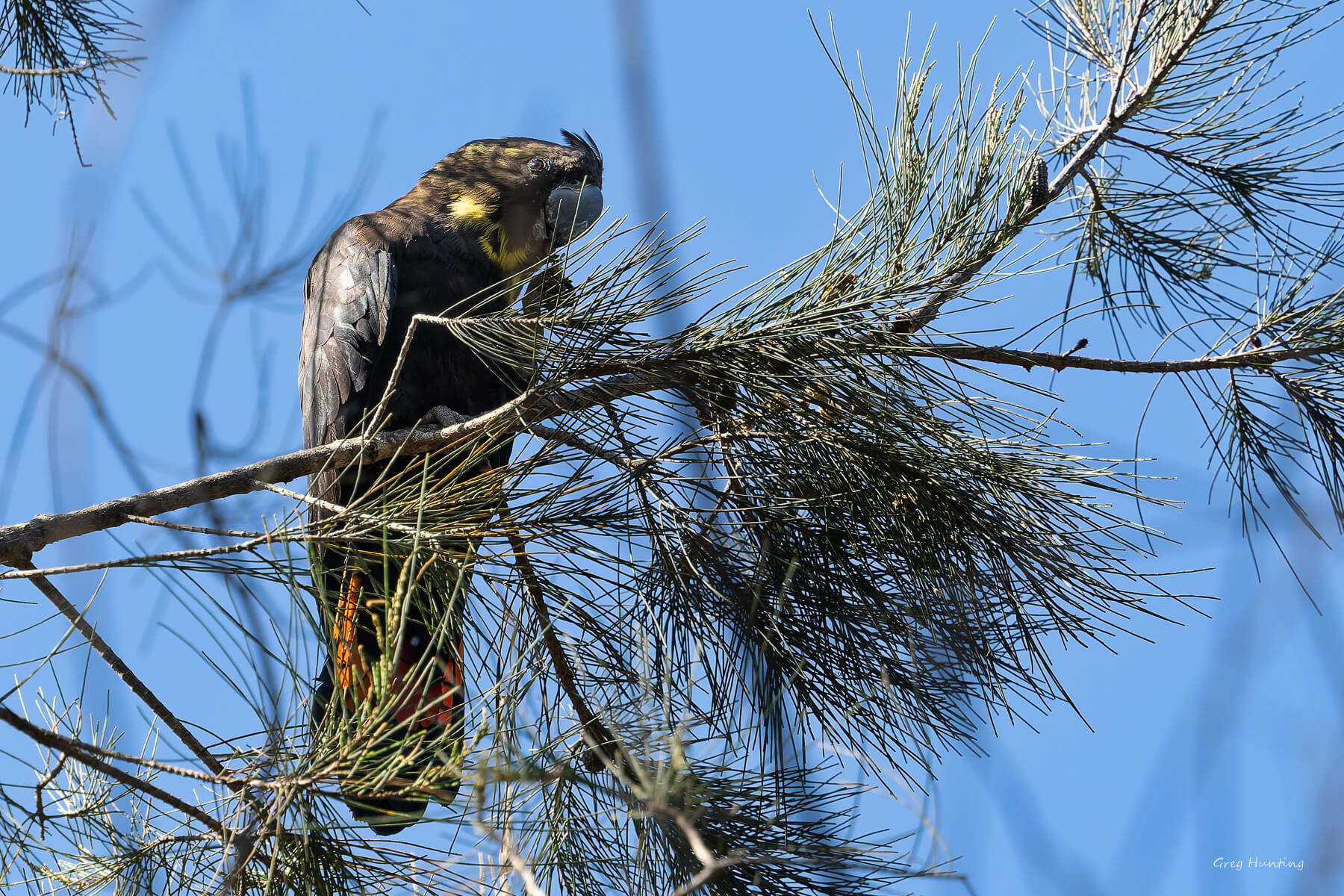
The Glossy Black Cockatoo is a beautiful member of the Australian cockatoo family. This one was enjoying a favourite snack of Allocasuarina seeds from a drooping Sheoak tree. Its yellow neck markings mean it’s a young bird. Note the striking orange/red tail feathers. They’re found across south-eastern Australia and are considered vulnerable.
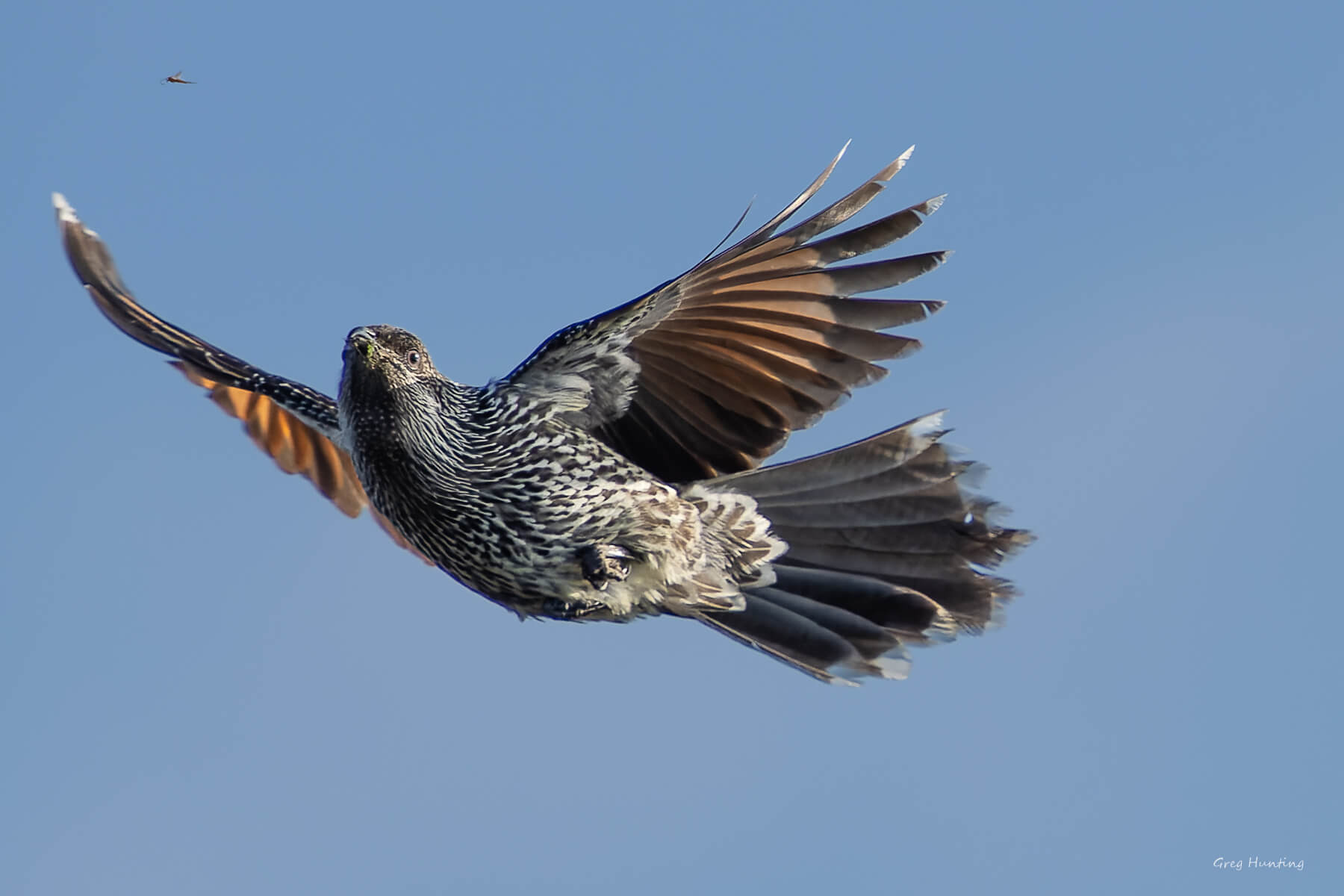
Wattlebirds are another of my favourites. If you look closely, this one is about to snap up an insect snack. They are Australia’s largest honeyeaters and usually hang around in extended family groups, playing chase and tag, zooming in and out of scrubs and trees. This one was caught in flight in Bermagui.
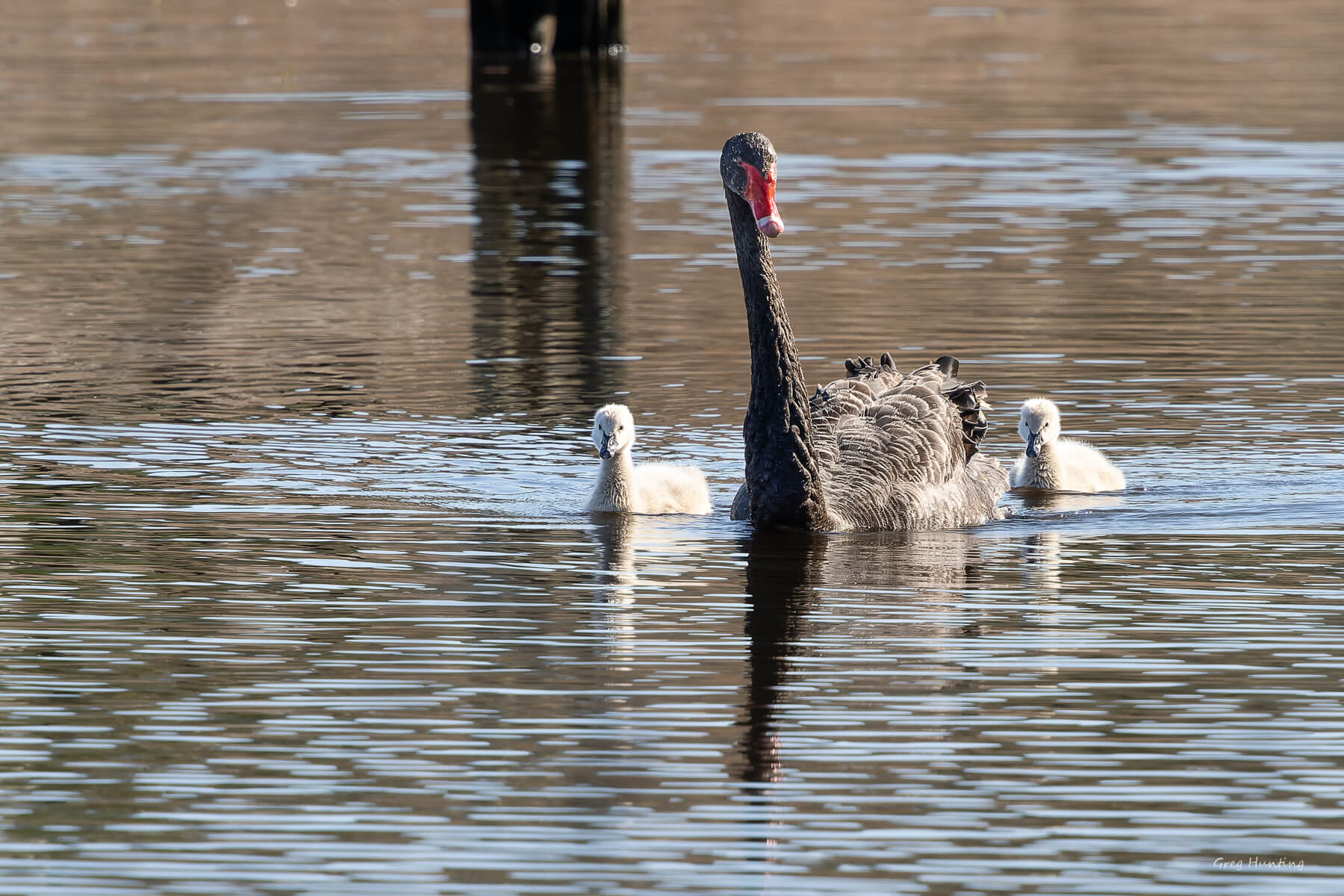
Black Swans with cygnets are a sure sign it’s Spring. This mum was carefully guarding her two remaining babies at Panboola wetlands. I’m told she started with 5 cygnets and a husband but over the past few weeks, three of the babies have disappeared and so has Dad swan. Among the local predators are a couple of foxes. Nature can be tough and we can only hope this single mother is able to protect her two remaining cygnets and raise them to adulthood – no easy task as it’s 5 to 7 months before they can fly!
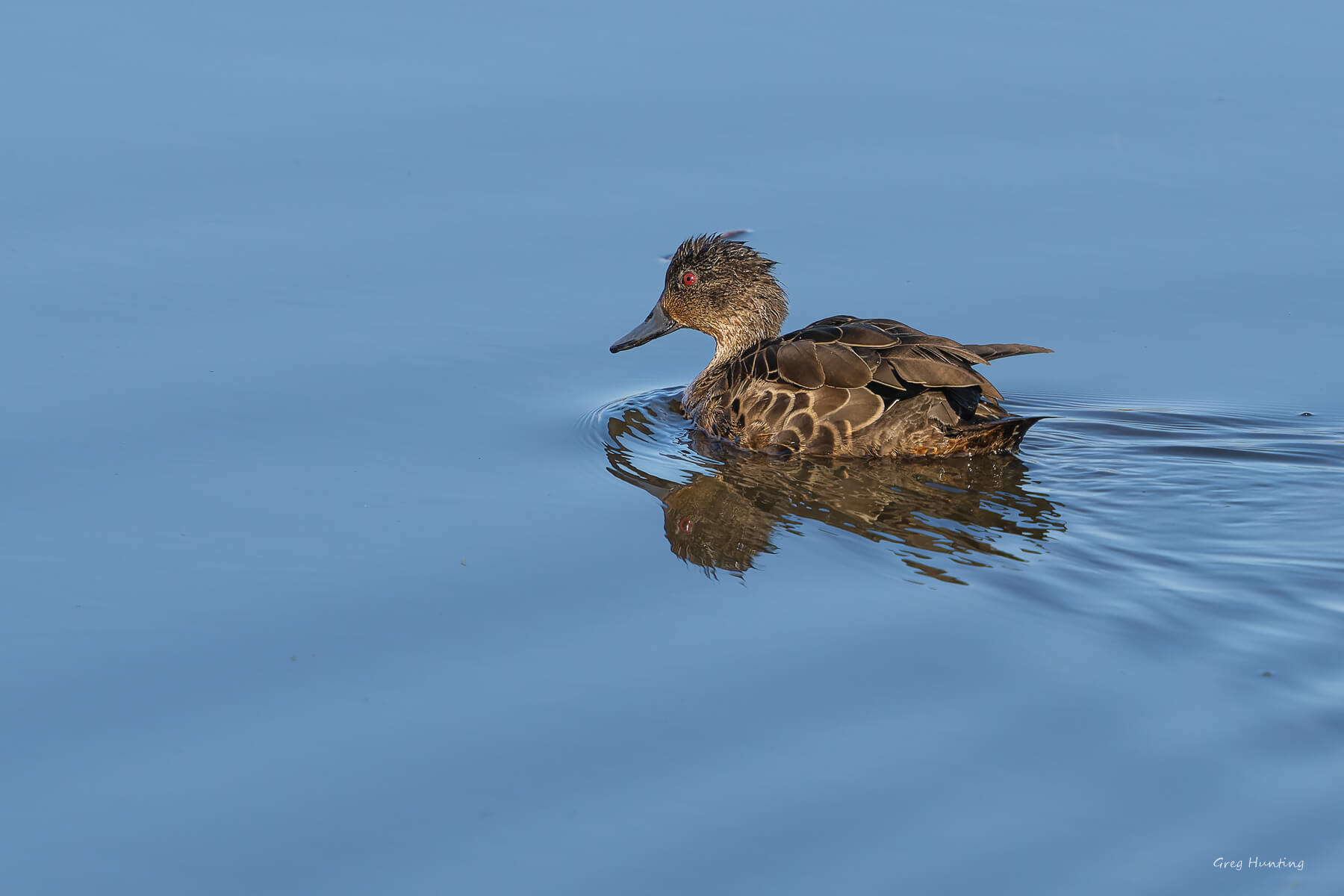
This female Chestnut Teal was having a paddle on Burrill Lake early on a still morning. Teal ducks tend to mate for life, but hubby was missing from this morning sojourn. Perhaps she’s still single? They’re a common site on our waterways but are migratory, usually within Australia, and from late Winter to early Summer they mate, nest (in trees 6 or 7 metres above the ground), lay eggs, and raise their young.
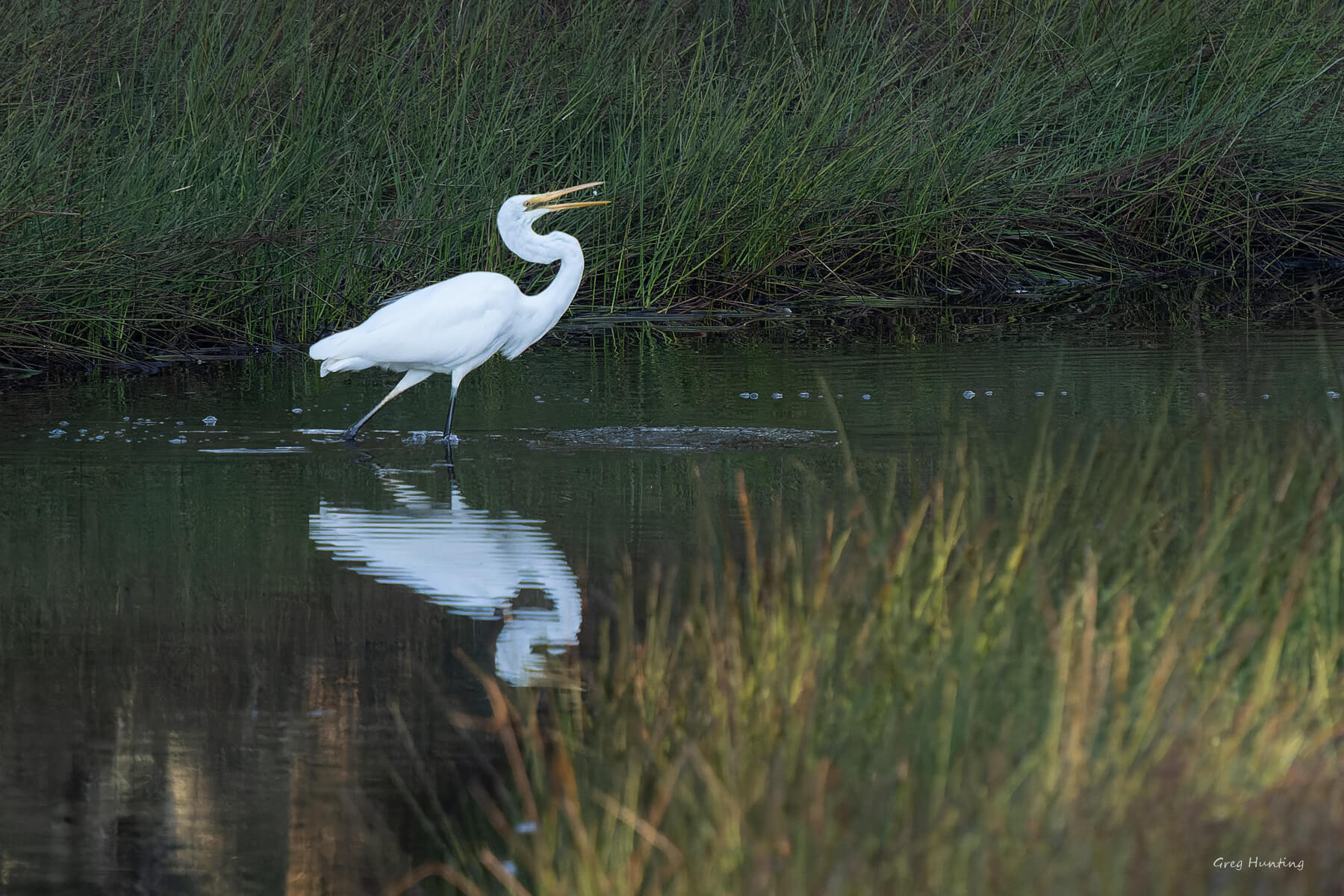
This Great Egret was doing a little fishing in Burrill Lake – little being the key. When you look closely, you’ll see a tiny fish is being tossed up to swallow. Breeding season has just started for egrets, but this one still has a yellow bill. Once they start breeding it turns black and they display “nuptial” plumage on their backs. This one is possibly a little too young for breeding.
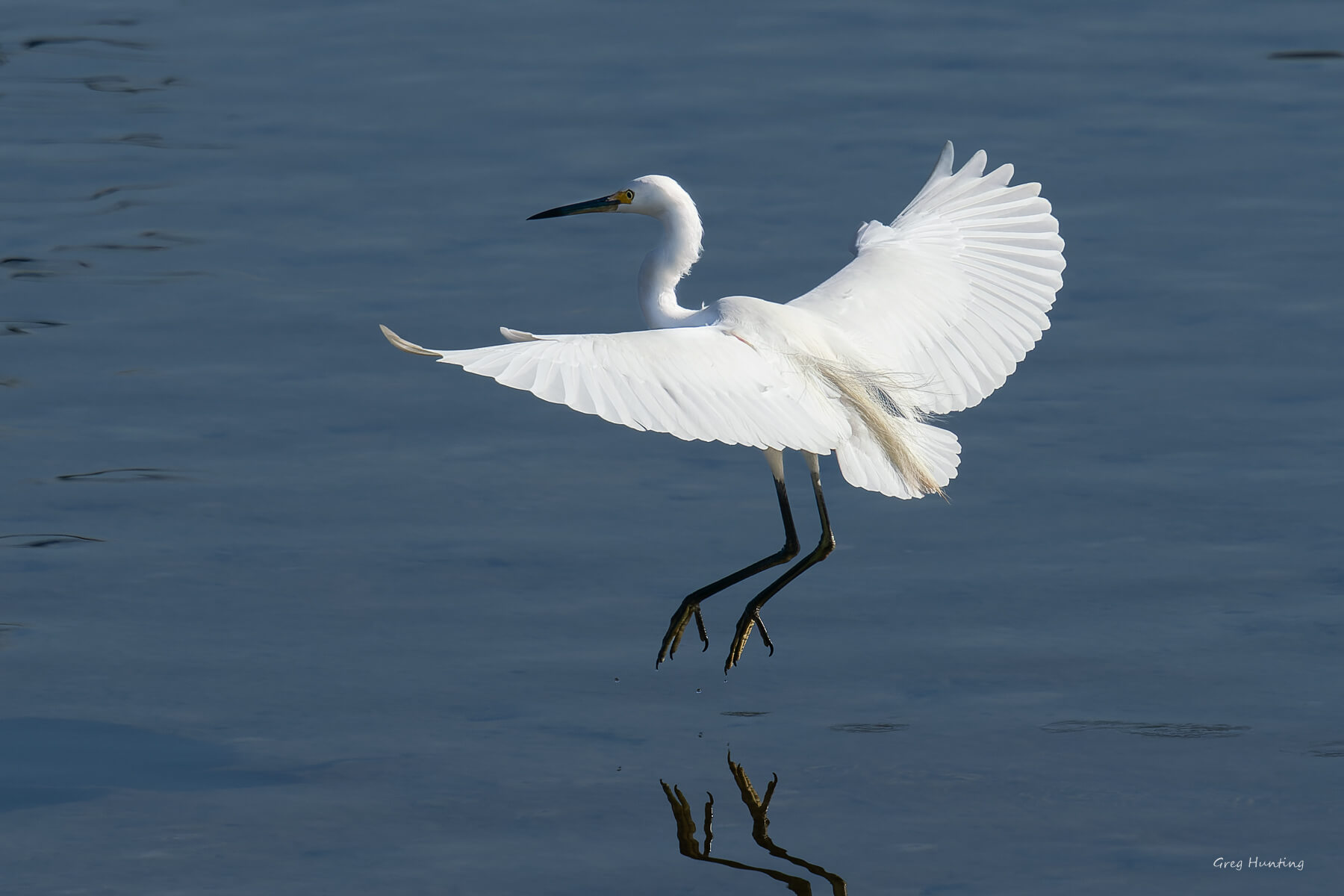
And for comparison, this Great Egret, at Bermagui, is into the breeding cycle, with a black bill and nuptial plumage. And doing a pretty good two-point landing!
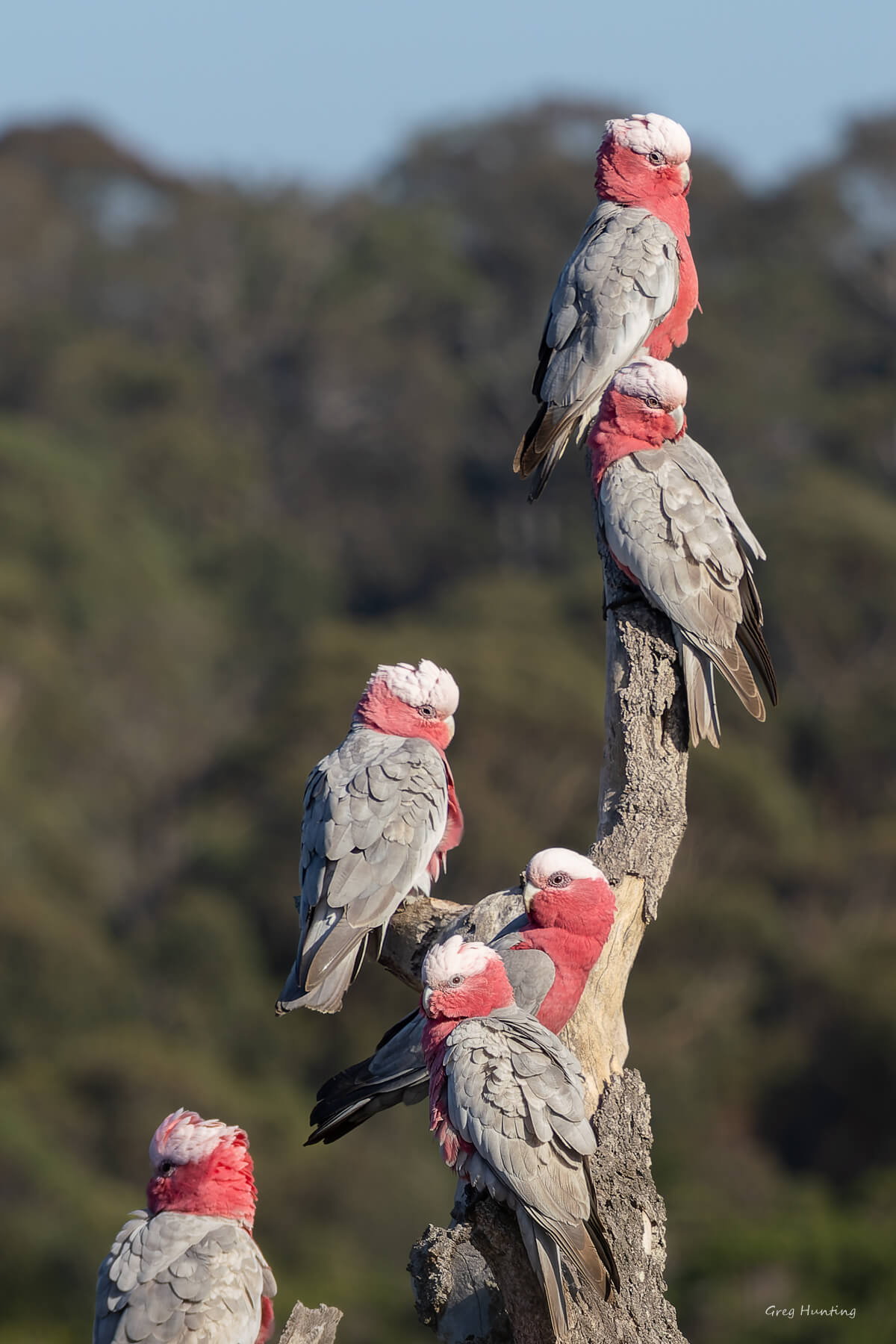
The past few months I’ve found “bird” trees. There has been a minor bird tree and a cormorant tree. This month I stumbled on a rather unexpected Galah tree at Bermagui. Interestingly these galahs all appear to be males. Female galahs have red eyes and males, brown. They may be common in our gardens and open spaces but they’re still a lot of fun to watch, often “acting the galah” with their antics.
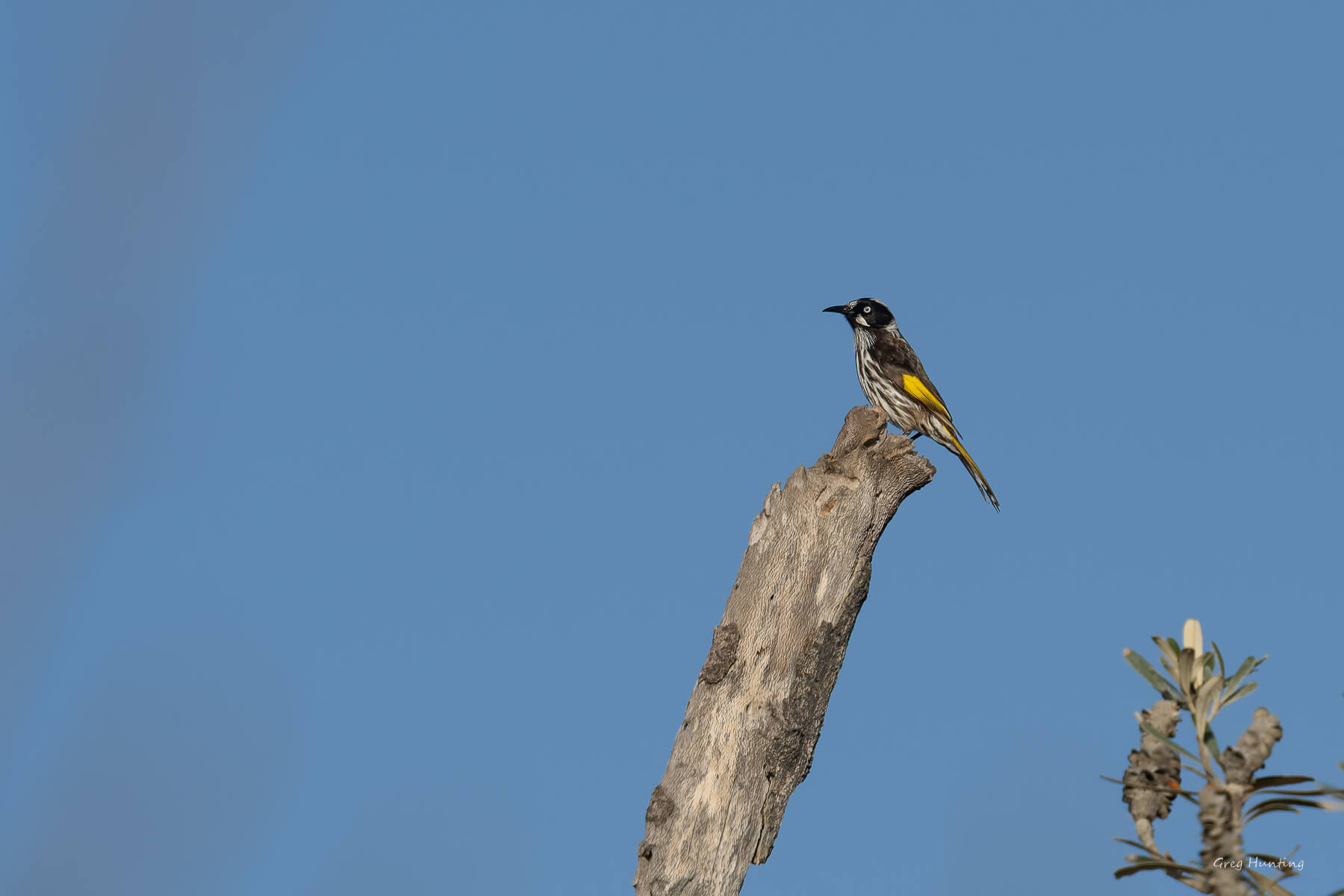
The New Holland Honeyeater has always been one of my favourites. They’re busy and colourful little birds found everywhere in Australia except the Northern Territory and often frequent suburban gardens where they are quite tolerant of us humans. As for the Northern Territory, other than an occasional sighting they generally steer clear. Why? Perhaps they’ve heard about the crocs!
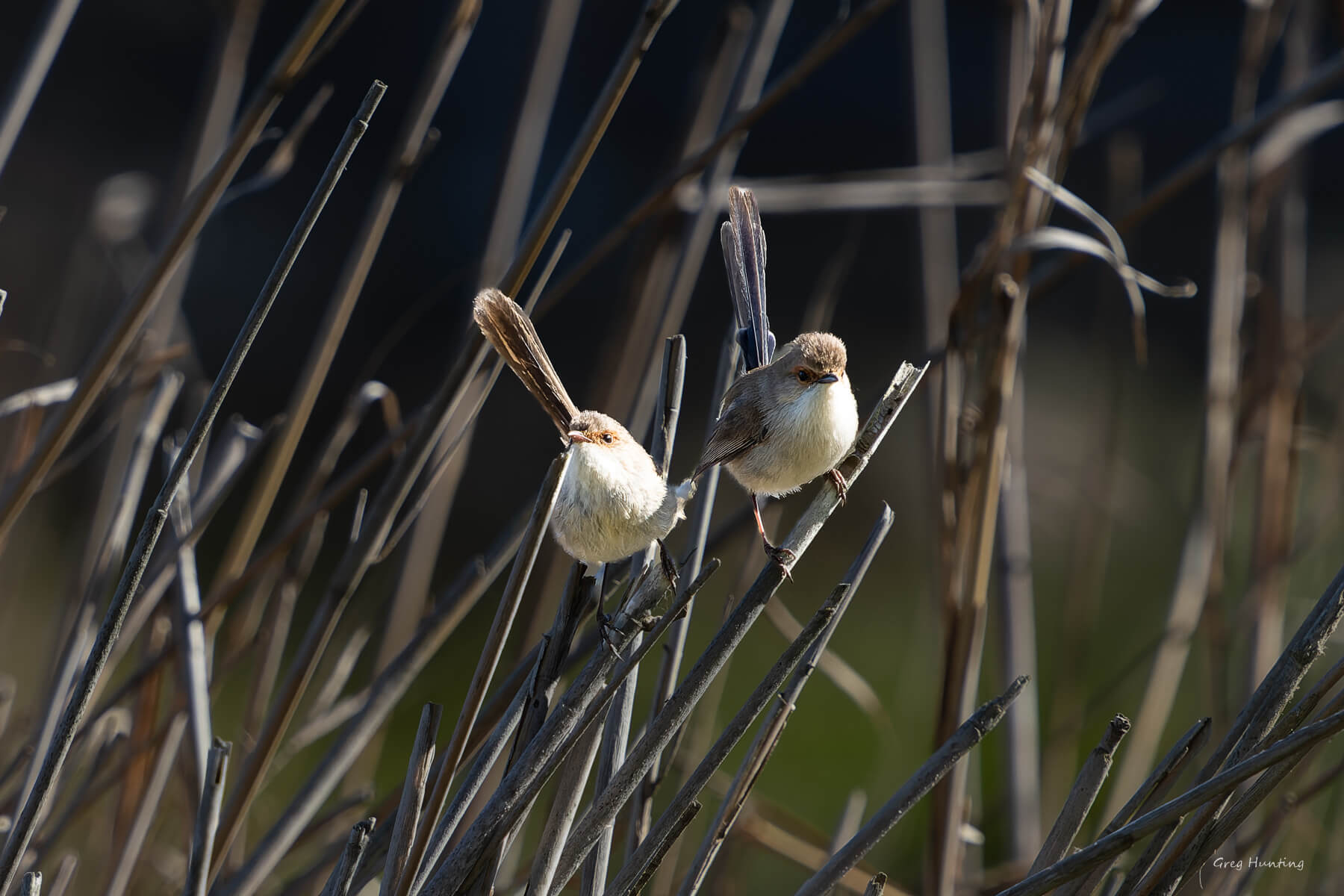
This pair of superb wrens were busy chasing bugs along the water edge at Panboola Wetlands. Always friendly and always active, they’re not shy and are a treat to sit and watch.
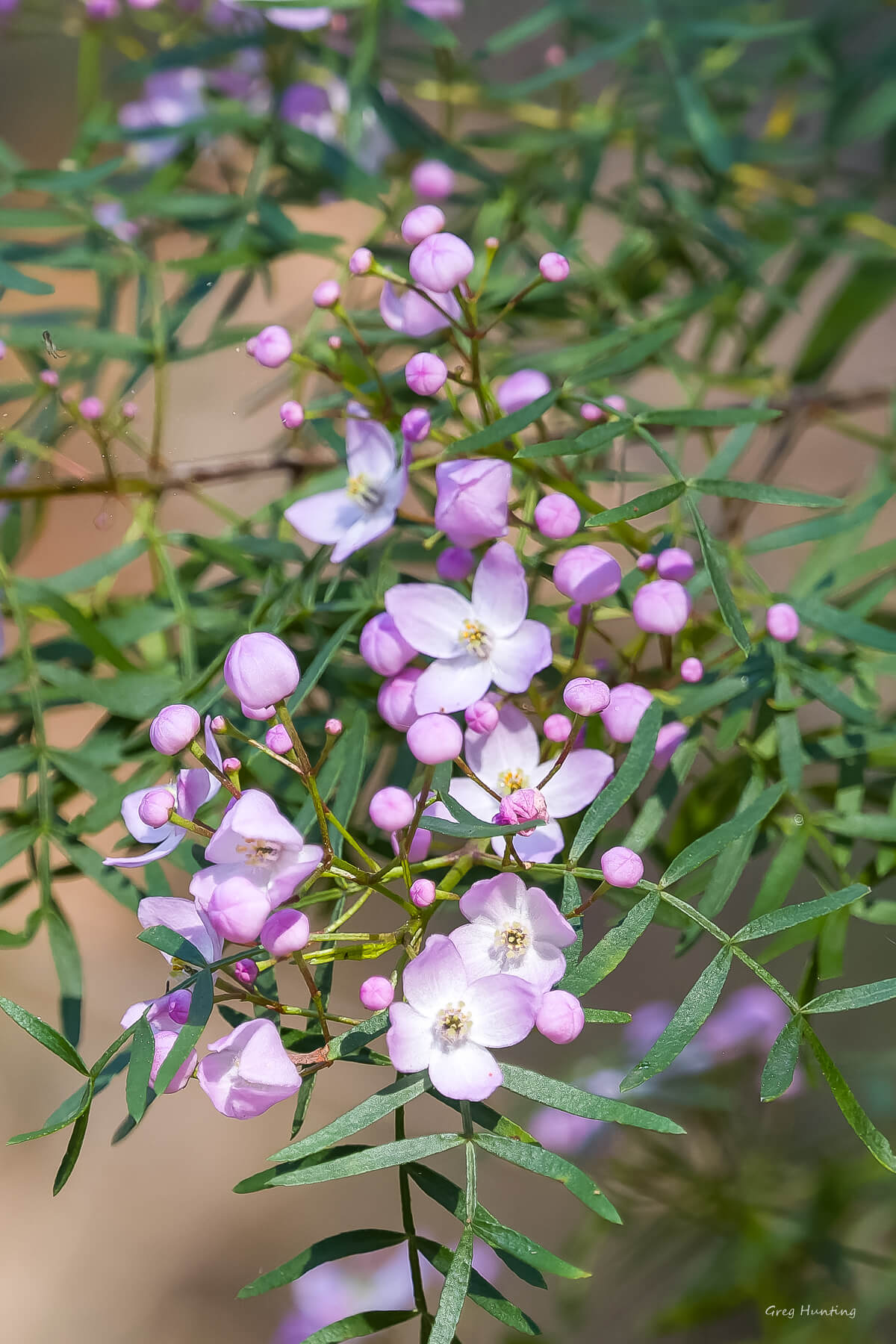
Finally, because it’s Spring, I thought a little bouquet of Wildfowers might be an appropriate way to wrap up this post.
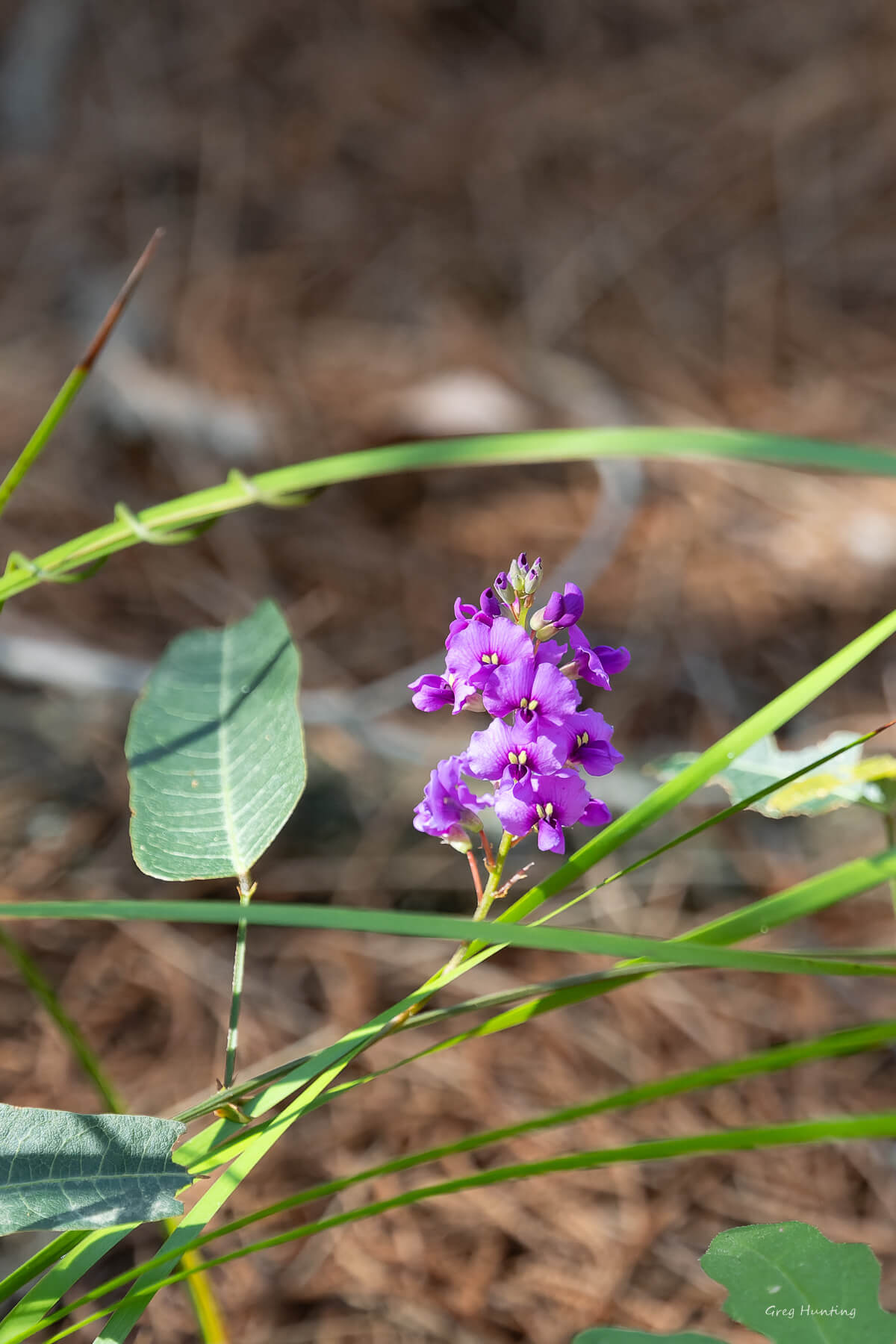
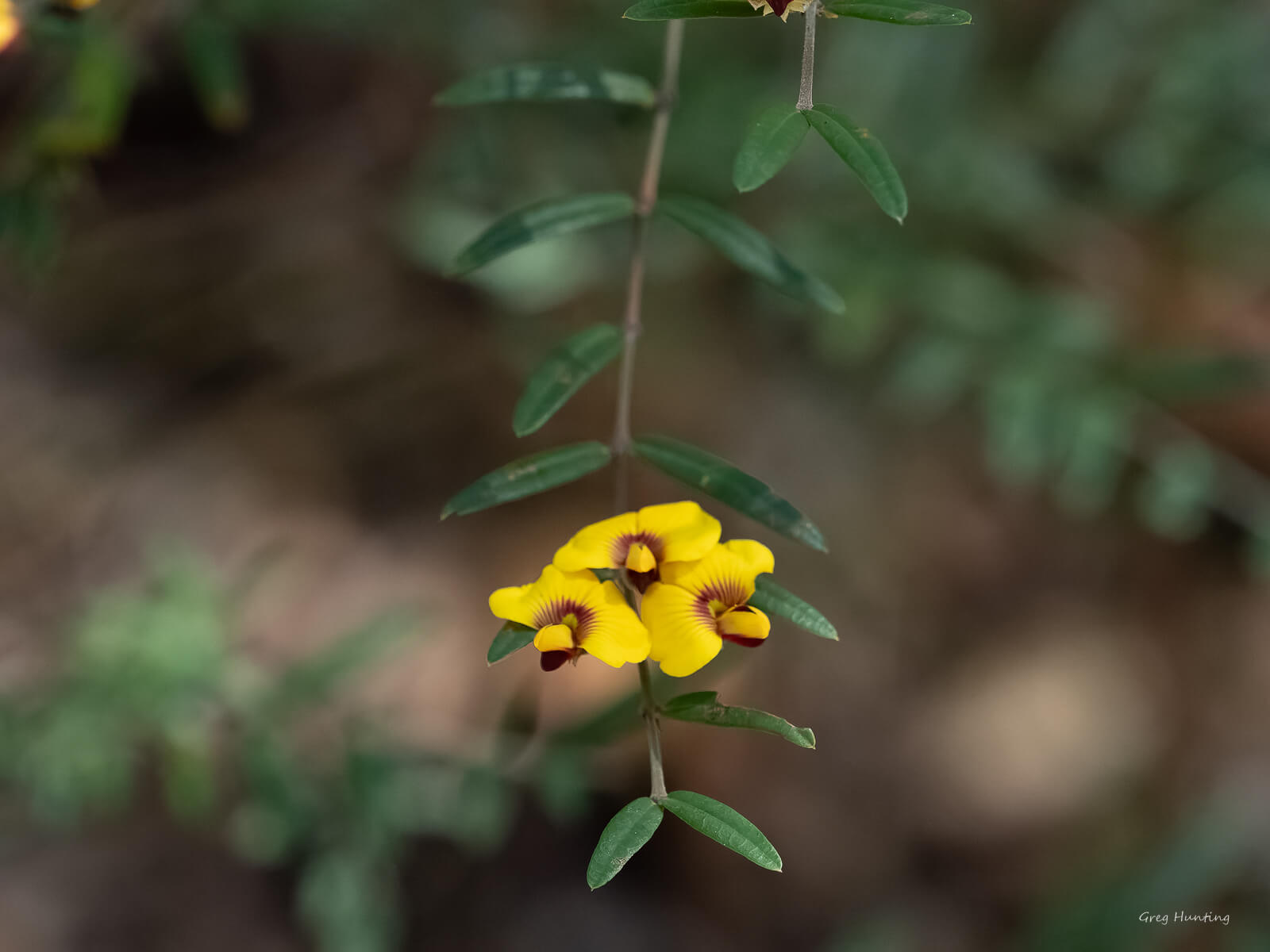
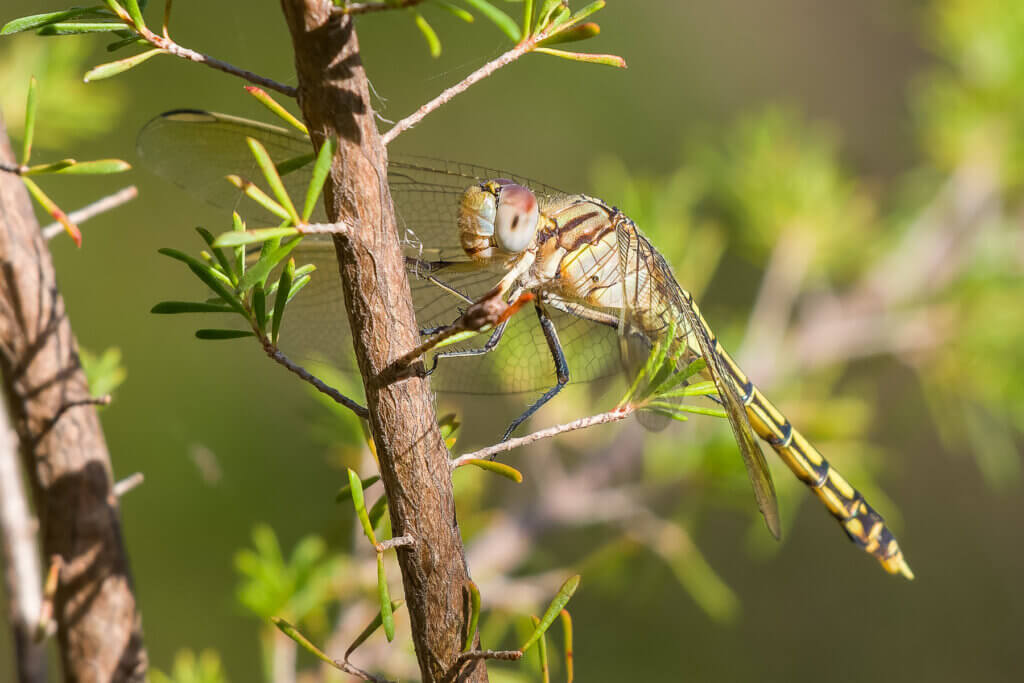
You might also like to check out Wallagoot Lake in Bournda National Park just north of Tura Beach. It’s a favourite for waterbirds like pelicans, cormorants and black Swans. Just click on the dragonfly image.
Please subscribe below to be notified when the next monthly Post is online. Your email will not be shared or used for any marketing, and you can unsubscribe at anytime.